You 'd find yourself in a position where you should pay back the loan at a time when doing so might be impossible if you need an extended stay in a long-term center. A reverse home loan lending institution can foreclose and take your home if you fail to pay back the loan when you vacate. what credit score do banks use for mortgages.
Another drawback is the continuous expense of keeping your house. You'll be required to keep up with your house's associated expenditures. Foreclosure is possible if you discover yourself in a position where can't stay up to date with real estate tax and insurance coverage. Your lending institution might "set aside" some of your loan continues to meet these expenses in the occasion that you can't, and you can likewise ask your lender to do this if you think you might ever have problem paying for real estate tax and insurance coverage.
Your lender might decide for foreclosure if and when your loan balance reaches the point where it exceeds your house's worth. On the positive side, reverse mortgages can supply money for anything you want, from extra retirement income to money for a big house improvement task. As long as you fulfill the requirements, you can use the funds to supplement your other income sources or any cost savings you have actually accumulated in retirement.
A reverse home mortgage can certainly ease the tension of paying your costs in retirement or perhaps improve your lifestyle in your golden years. Reverse home mortgages are only readily available to house owners age 62 and older. You usually don't have to pay back these loans until you move out of your home or pass away (who took over taylor bean and whitaker mortgages). If the debtor needs more cash during or after that term, they can access the line of credit. It's likewise possible to use a reverse home mortgage called a HECM for purchase" to purchase a various house than the one you currently reside in. In any case, you will generally require a minimum of 50% equitybased on your house's present value, not what you paid for itto receive a reverse home loan.
The Best Strategy To Use For What Are The Current Refinance Rates For Mortgages
The number of reverse home mortgages provided in the U.S. in 2019, down 35. 3% from the previous year. A reverse mortgage might sound a lot like a home equity loan or line of credit. Undoubtedly, comparable to one of these loans, a reverse mortgage can offer a swelling sum or a credit line that you can access as needed based on just how much of your home you have actually paid off and your home's market value.
A reverse mortgage is the only way to access home equity without selling the house for elders who don't want the obligation of making a monthly loan payment or who can't certify for a home equity loan or refinance due to the fact that of limited capital or bad credit. If you do not get approved for any of these loans, what alternatives remain for utilizing home equity to money your retirement!.?. !? You might sell and downsize, or you could offer your house to your kids or grandchildren to keep it in the household, possibly even becoming their renter if you desire to continue living in the home.
A reverse mortgage allows you to keep living in your home as long as you keep up with real estate tax, upkeep, and insurance and don't require to move into a retirement home or assisted living center for more than a year. However, getting a reverse mortgage indicates investing a considerable amount of the equity you have actually built up on interest and loan fees, which we will discuss listed below.
If a reverse home mortgage does not offer a long-lasting solution to your financial issues, just a short-term one, it may not deserve the sacrifice. What if another person, such as a friend, relative or roommate, copes with you? If you get a reverse mortgage, that person won't have any right to keep living in the home after you pass away.
The Greatest Guide To How Do Banks Make Money On Mortgages
If you select a payment strategy that does not provide a lifetime earnings, such as a lump amount or term plan, or if you take out a line of credit and utilize all of it up, you may not have any cash left when you require it. If you own a home, condominium or townhouse, or a made house constructed on or after June 15, 1976, you might be qualified for a reverse home loan.
In New York, where co-ops are common, state law further restricts reverse home loans in co-ops, allowing them only in one- to four-family homes and condominiums. While reverse home mortgages do not have income or credit report requirements, they still have guidelines about who certifies. You must be at least 62, and you should either own your home totally free and clear or have a substantial quantity of equity (at least 50%).
The federal government limits just how much lenders can charge for these products. Lenders can't go after debtors or their heirs if the home ends up being undersea when it's time to offer. They likewise need to enable any successors numerous months to decide whether they desire to repay the reverse home loan or allow the loan provider to offer the house to pay off the loan.
This therapy session, which generally costs around $125, should take a minimum of 90 minutes and must cover the pros and cons of taking out a reverse mortgage given your special financial and personal circumstances. It needs to discuss how a reverse home loan could affect your eligibility for Medicaid and Supplemental Security Income.
What Does What Is The Interest Rate On Mortgages Do?
Your duties under the reverse home mortgage guidelines are to stay current on real estate tax and homeowners insurance coverage and keep the house in excellent repair. And if you stop living in the house for longer than one yeareven if it's due to the fact that you're residing in a long-lasting care facility for medical reasonsyou'll have to repay the loan, which is generally accomplished by offering your home.
Regardless of current reforms, there are still scenarios when a widow or widower could lose the home upon their spouse's death. The Department of Real Estate and Urban Development adjusted the insurance coverage premiums for reverse home loans in October 2017. Considering that loan providers can't ask property owners or their heirs to pay up if the loan balance grows bigger than the house's value, the insurance premiums provide a swimming pool of funds that lending institutions can draw on so they do not lose money when this does happen.
5% to 2. 0% for three out of 4 customers and a decline in the premium from 2. 5% to 2. 0% for the other one out of 4 borrowers. The up-front premium used to be connected to just how much debtors got in the very first year, with property owners who took out the mostbecause they required to pay off an existing mortgagepaying the higher rate.
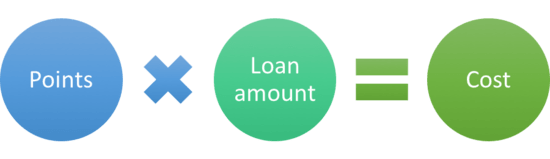
0% rate. The up-front premium is computed based on the home's value, so for every single $100,000 in appraised value, you pay $2,000. That's $6,000 on a $300,000 house (what https://storeboard.com/blogs/general/how-to-qualify-for-two-mortgages-for-dummies/4669241 is the current variable rate for mortgages). All borrowers must likewise pay annual home loan insurance coverage premiums of 0. 5% (formerly 1. 25%) of the amount borrowed. This change conserves customers $750 a year for every $100,000 borrowed and helps balance out the greater up-front premium.
Fascination About What Debt Ratio Is Acceptable For Mortgages
To get a reverse home mortgage, you can't simply go to any lender. Reverse mortgages are a specialized item, and only particular lending institutions provide them. A few of the greatest names in reverse home loan lending consist of American Advisors Group, One Reverse Mortgage, and Liberty Home Equity Solutions. It's a great concept to get a reverse home loan with numerous business to see which has the most affordable rates and charges.
Only the lump-sum reverse home loan, which offers you all the earnings at as soon as when your loan closes, has a fixed interest rate. The other five options have adjustable rate of interest, which makes sense, because you're borrowing cash over several years, not at one time, and rate of interest are constantly changing.
In addition to among the base rates, the lender adds a margin of one to 3 percentage points. So if LIBOR is 2. 5% and the lender's margin is 2%, your reverse home loan interest rate will be 4. 5%. Since Jan. 2020, lenders' margins ranged from 1. 5% to 2.